Architecture

Tuesday, 9 December 2025
29 facts about Palace of Versailles
Former residence of the kings of France
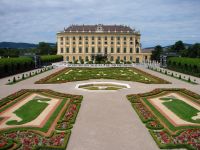
The Palace of Versailles is one of the largest palace complexes in Europe. It is part of the historical and cultural heritage of France, as a symbol o ...

Did you know?

Neuschwanstein Castle
The area of Neuschwanstein Castle is about 6000 square meters. There are 200 rooms, most of which are unused.
In one of the halls there is a colorful stained glass window depicting a scene from Wagner's opera T ...
Empire State Building
The building weighs more than 360 thousand tons.
During its construction, 60 thousand tons of steel, 5663 m³ of limestone and granite, 740 tons of stainless steel and aluminum, 10 million bricks were used.
Balmoral Castle
Balmoral Castle was a favorite haunt of Elizabeth II, as it was for her great-grandmother Victoria.
She enjoyed spending time there from an early age. As a child, she spent holidays there with her sis ...
Krak des Chevaliers
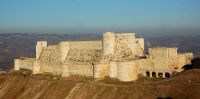
In 1096, the first armed expedition (there were seven in total) set off from Western Europe, known as the Crusade.
The Crusades were a response to the call of Pope Urban II, and their goal was to liberate Jerusalem ...
Windsor Castle
In 1820, George IV came to the throne of Great Britain.
He intended to create a complex of royal palaces that would reflect his wealth and influence as the ...
Windsor Castle
The site for the construction of the fortress, which was later transformed into Windsor Castle, was chosen on a steep, limestone hill, where the first wooden building existed as early as 1070.
Windsor Castle was strategically important due to its proximity to both the Thames, a key medieval r ...
Temple of Artemis
In 268 AD, an East Germanic tribe called Goths raided the city of Ephesus and severely damaged the third temple.
It is unknown how big the destruction of the temple after the Goths' invasion was. It unquestionably has been repaired after the 268 damage but never restored to its breathtaking original form.
Temple of Artemis
Ephesus was a city devoted to the Artemis.
Artemis was a goddess of fertility, virginity, hunting, wilderness and the Moon. In the 4th century BC, Artemis was identified with the Roman goddess Diana.
Colosseum
The present name most likely comes from the statue of Colossus of Nero—an enormous sculpture erected at Nero’s request, that stood nearby to the site where the Colosseum was built.
The Colossus of Nero’s author was a Greek sculptor, Zenodoros, who designed the sculpture and was re ...
Brandenburg Gate
In 1793, a monument to a quadriga driven by the winged goddess Nike was placed on the gate.