Your browser does not support JavaScript!
Random topic
Sections
Animals
Architecture
Biography
Cities
Countries
Culture
Entertainment
Food
Geography
History
Plants
Science
Technology
Countries
Tuesday, 27 October 2026
37 facts about Slovakia
A land of castles and palaces
Slovakia is a small landlocked country that was established in its present form after the division of Czechoslovakia in 1993. It is one of the countri ...
Did you know?
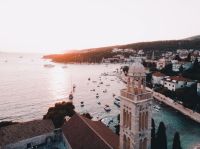
Croatia
Catholicism is the dominant religion in Croatia (76.8% of the population are Catholics).
Croatian territories were Christianized earlier than Polish lands. The official date of adoption of ...
Find out more
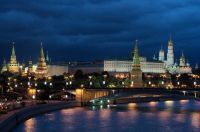
Russia
The highest mountain in Russia is
Mount Elbrus
, with an altitude of 5,642 meters above sea level.
It is located in the western part of the Caucasus Mountains.
Read all facts
Ireland
Ireland is famous for its stone, medieval strongholds, and historic abbeys, often located in picturesque natural surroundings.
The most beautiful are the Rock of Cashel, Malahide Castle, Ross, and Dunseverick.One of the castles ...
Find out more
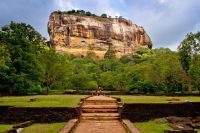
Sri Lanka
It is one of the largest islands in the Indian Ocean.
Its area covers 65,600 square kilometers. It is the twenty-fifth largest island in the world by area.
Read all facts
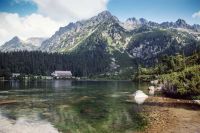
Slovakia
In Kremnica, in central Slovakia, there is a mint considered to be the oldest facility of this type in the world.
The beginnings of its activity date back to 1328. Currently, the Kremnica mint mints, among others, Slovak euro coins.
Read all facts
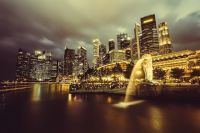
Singapore
There is almost no agriculture in Singapore, and aquarium fish farming is the most important.
Read all facts
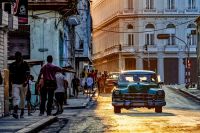
Cuba
There are five universities in Cuba, the most important scientific institution being the Cuban Academy of Sciences in Havana, founded in 1962.
In Cuba, schooling is compulsory for all children between the ages of 6 and 15. Children wear unifor ...
Find out more
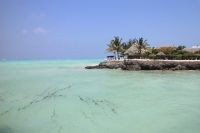
Zanzibar
In addition to spices, Zanzibar also exports seaweed and raffia (a bamboo palm with long pinnately divided leaves, the largest plants in the world with fiber-producing leaves).
Fishing and tourism are also well-developed.
Read all facts
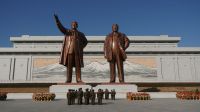
North Korea
Taedong-gang is North Korea's longest river.
Its length is 439 kilometers, flowing from north to south, passing through Pyongyang and flowing into the West Korean Gulf.
Read all facts
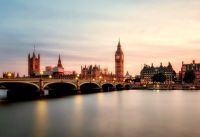
England
The first underground railway system was the London Underground, which opened in 1863.
Read all facts
34 facts about Republic of South Africa
A country with three cities as its capital
South Africa is the southernmost country in Africa. It is inhabited by a multi-ethnic society encompassing many different cultures, languages, and rel ...
34 facts about Bulgaria
One of the oldest European countries
Bulgaria is a small country in southeastern Europe, not much larger than Iceland or the American state of Tennessee. Its surface is very diversified t ...
45 facts about Switzerland
One of the smallest countries in Europe
Switzerland is one of the most interesting countries. It is a small landlocked country at the junction of Western, Central, and Southern Europe, assoc ...
15 facts about South Korea
To benefit all people
The motto of this country is very altruistic but reflects the spirit of the South Korean nation. Although in the 1970s it lagged behind North Korea's ...
43 facts about Peru
The third largest country in South America
Peru is an Andean country in South America whose territory has a rich, centuries-old history. There were several significant Native American civilizat ...
37 facts about Portugal
The westernmost country in Europe
Portugal is a relatively small country on the western edge of Europe. For years, this country has been attracting tourists from all over the world wit ...
39 facts about Ireland
Emerald Isle
Ireland is a Western European country located on the island of the same name. It occupies most of the island, which it shares with Northern Ireland an ...
31 facts about Austria
A landlocked country in the Eastern Alps
Austria is a small country located in Central Europe. It is a mountainous country, with two-thirds of the area covered by the Alps. Due to its mountai ...
27 facts about Czech Republic
Land of religious tolerance and fabolous Knödels
The Czech Republic is a small, upland, and mountainous country in Central Europe, whose area is nearly 79.000 square kilometers. Just over 10.5 millio ...
31 facts about Thailand
A country on the Indochinese Peninsula
Thailand is an Asian country located in its south-eastern part, famous for its interesting culture and religious architecture. This exotic country, wh ...
25 facts about Albania
Land of Eagles
Albania is a small country located on the Balkan Peninsula. This small and economically underdeveloped country is characterized by a mountainous lands ...
32 facts about Uganda
One of the highest situated African countries
Uganda is a landlocked African country located on Africa's largest lake and the Nile basin. It is a country of young people - over two-thirds of its i ...
15 facts about Egypt
The home of the calendar, door lock, toothpaste and make-up
More than five thousand years have passed since the first unification and formation of a larger statehood, but Egypt was inhabited by various tribes a ...
31 facts about Brazil
South America's largest country
Brazil is the largest and most populous country in South America and one of the largest and most populous countries in the world. A former Portuguese ...
24 facts about Zanzibar
A paradise island in the Indian Ocean
Zanzibar is the largest island of the archipelago of the same name located in the Indian Ocean. It is a destination for many tourists looking for both ...
More