Geography

Wednesday, 17 December 2025
16 facts about Hawaii
Volcanic paradise
This picturesque archipelago located in the middle of the Pacific Ocean owes its creation entirely to volcanic eruptions. Lush deciduous forests inter ...

Did you know?

Lake Huron
It has over 80 tributaries.
Approximately 192 billion liters of water flow from Lake Superior through the St. Marys River daily. Another 130 billion liters of water flow from Lake Michigan through the Straits of Mackinac.
Caspian Sea
It is described as the world’s largest lake.
However, it is not a freshwater body, but due to 1,2% salinity puts it among the brackish water bodies.
Mount Tambora
The April 5th eruption was heard within 1,400 kilometers range.
The British troops stationed in Java, an Indonesian island, mistaken the sound of the explosion for ...
Wadi Rum
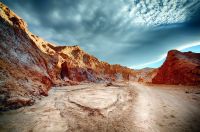
Wadi Rum, also known as the Valley of the Moon, is the largest wadi in Jordan.
Wadi is a traditional Arabic term for a valley. The term can also refer to a wet (ephemeral) riverbe ...
Gulf of Mexico
It formed approximately 300 million years ago in the Late Triassic.
Mount Tambora
The 1815 eruption is classified as VEI-7.
VEI—Volcanic Explosivity Index—a 1–8 scale of the explosivity of volcanic eruptions describes the 18 ...
Manhattan
In 1664, the English took over New Amsterdam and changed the name of the city to New York.
Under English rule, the city grew rapidly. In 1700 it housed 5000 inhabitants.
Iguazú Falls
There are legends about the origin of Iguazu Falls.
One of them tells of a deity who intended to marry a beautiful woman named Naipi. However, the woman ...
Galapagos Islands
The islands are located in an area called the Galapagos Triple Junction.
This is a geological area in the southeastern Pacific Ocean. The junction is where the Pacific Plate (the largest tectonic plate on Earth), the Cocos Plate and the Nazca Plate meet.
Dead Sea
The Dead Sea is the deepest inland saltwater body of water.