Culture

Monday, 13 July 2026
16 facts about Fabergé egg
The most expensive Easter eggs in the world
Fabergé eggs are the most expensive Easter eggs in the world, studded with jewels, hiding equally expensive surprises inside. The idea to create them ...

Did you know?

Orsay Museum
The hall of railway station was 140 meters long and 40 meters wide, covered by a structure with a glass barrel roof.
Inside there were 16 platforms, a restaurant, a banquet hall and a luxury hotel with 370 rooms.
Fabergé egg
The first egg was created by Fabergé in 1885.
It was ordered by Tsar Alexander III as an Easter surprise for his wife Maria Feodorovna. Since this ...
Lady with an Ermine
The painting "Lady with an Ermine" remained in Cecilia's hands until she died in 1536.
That it was in her possession is attested to by Cecilia's correspondence with the Marquise of Mantua, Isabella d'Este, who in a letter from 1498 asks to borrow the painting from her.
The Scream by Edvard Munch
"The Scream has been featured on stamps issued by the Norwegian Postal Service.
In 2013, it was chosen as one of four paintings for a series of stamps commemorating the 150th anniversary of Edvard Munch's birth.
Athena Goddess
Athena’s counterpart in ancient Rome was Minerva.
Together with Jupiter and Juno, she was part of the Capitoline Triad - a group of three deities who were worshipped in the Rome’s Capitoline Hill temple.
Mona Lisa
In 2005, an expert from the Heidelberg University Library discovered a note stating that Leonardo was working on a portrait of Lisa del Giocondo.
The note was made in 1503, in the margin of a book written by Cicero. Book belonged to Agostino Vespucci, a Florentine chancellery official, clerk, and assistant to Niccolò Machiavelli.
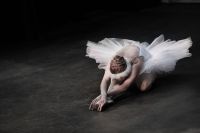
Swan Lake
Act II, by Lev Ivanov, is the least modified by other choreographers.
It is considered one of the most outstanding displays of choreography. It is from this part that the world’s most famous pas de quatre (dance of four) - the dance of the four swans - originates.
Judaism
Rabbinic Judaism, also known as Talmudic Judaism, takes its name from the Talmud, a collection of rabbinic teachings, both in the form of a commentary on the Mishnah and a commentary on the Bible, written in the 5th-7th centuries.
Judaism in the Talmudic form was accepted as valid by virtually all Jews (the Talmud was not recognized by the Karaites). Rabbinic Judaism became the basis for all later branches of Judaism.
Mona Lisa
It is assumed that the painting was commissioned by a Florentine merchant, Francesco Gioconda, who never became its owner.
The biographers of da Vinci argue on this subject. There are suppositions that it was the master himself who forced the merchant to agree to paint the portrait of his wife.
The Scream by Edvard Munch
Munch also created a lithographic stone.
It shows the 1895 version of the painting. Only a few of Munch's prints have survived.Most of the existing prints were made without Munch's knowledge by a printer during the artist's absence.