The first kerosene lamp was constructed in 1853 by a Pole, Ignacy Lukasiewicz.
Lukasiewicz was a pharmacist who worked in the Lviv pharmacy "Under the Gold Star," owned by Piotr Mikolasch, a well-known Lviv businessman and pharmacist.
However, Łukasiewicz did not stop his distillation attempts and finally found the proper fraction, collected at the temperature of 250-350 °C (482 - 662 °F), devoid of light petrols and heavy hydrocarbons.
The resulting kerosene burned very well, so Łukasiewicz decided to use it for lighting rooms.
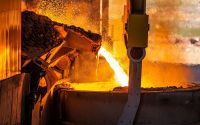
China is the world's largest producer of steel. The country accounts for 57% of the world's production.
The European Union is the second largest producer and India is the third largest producer. Other major global steel producers are: Japan, USA, Russia, South Korea and Turkey.
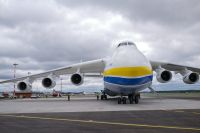
Loading of the aircraft is possible only after lifting the nose of the fuselage. The cargo hold has a capacity of 1300 cubic meters and the maximum cargo weight is 250 tons.
Unlike the An-124, the Mryia has two vertical stabilizers on the tail, allowing it to transport extremely heavy loads that would negatively affect the aerodynamics of a classic “single” tail.

The World Health Organization considers kerosene a polluting fuel and recommends that "governments and medical practitioners immediately stop promoting its use in the household."
Petroleum smoke contains high levels of harmful particulate matter, and household kerosene use is as ...