Cities

Wednesday, 6 May 2026
37 facts about Saint Petersburg
A city of many names
It was a dream and a matter of prestige for the Romanov dynasty to gain access to the Baltic Sea and build a metropolis to testify to Russia's emergin ...

Did you know?

San Gimignano
San Gimignano was founded thanks to St. Gimignano, the bishop of Modena.
According to chroniclers, during Lucius Sergius Catillina’s failed coup against the Roman Republic i ...
Tallinn
As an important trading port between Russia and Scandinavia, Tallinn became a target for expansion by the Teutonic Order and Denmark.
In 1219, the city was conquered by the Danish king Waldemar II the Victorious, who ordered the exist ...
Kaliningrad
There are 21 cities and 3 urban-type settlements in the oblast.
The largest of them is Kaliningrad, whose historical name is Königsberg.
Potsdam
In 1415, Potsdam became the property of the Hohenzollerns.
In 1660, the city was chosen as the hunting residence of the Elector of Brandenburg, Frederick William I, and became the core of a powerful state that later transformed into the Kingdom of Prussia.
Shanghai
It has its own dialect.
Shanghainese is so distinctive from Chinese that most people from around the country cannot understand it.
Copenhagen
In Copenhagen's harbor, there is a statue of the Little Mermaid by Edvard Eriksen.
The sculpture depicts a character from Hans Christian Andersen's fairy tale and was unveiled on Augu ...
Bruges
A slow process of stagnation began for Bruges.
Attempts were made to modernize the ports, but the city never again regained its former glory or status. The city was called Bruges-la-Morte, which means Dead Burges.
Chicago
The first railroad connecting Chicago with the city of Freeport opened in 1853.
Palermo
Palermo came under the rule of the Norman dynasty of Altavilla, from which came the first king of the Kingdom of Sicily-Roger II.
The Normans decided to leave the defeated Arabs in the city and build the future power of Palermo to ...
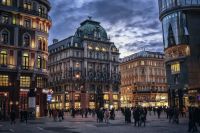
Vienna
When the Habsburg dynasty took over the reign of Vienna in 1276, it became the capital of the Holy Roman Empire, the seat of the bishopric, and a scientific and cultural center.
During the reign of Rudolf IV the Founder of the Habsburg dynasty, the construction of St. Stephen’s Cathedral (the pride and one of the symbols of the city) began, and a university was established.