Your browser does not support JavaScript!
Random topic
Sections
Animals
Architecture
Biography
Cities
Countries
Culture
Entertainment
Food
Geography
History
Plants
Science
Technology
Animals
Sunday, 25 October 2026
25 facts about Quokkas
The world’s happiest animal
Quokkas are famous for their “smile.” These small marsupials inhabit certain parts of Australia and have become somewhat of a world phenomenon. Ever s ...
Did you know?
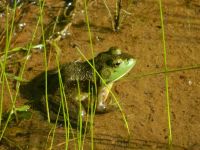
American bullfrog
Their average lifespan is 7 to 10 years in the wild and up to 16 years in captivity.
Read all facts
Bird of Paradise
There is considerable variation in beak structure in birds of paradise of different species.
In some (riflebirds, sicklebills) it resembles a raven's beak, while in others it is thin and small ...
Find out more
Adder
Not every adder bite results in an injection of venom.
Venom is injected in about 50 percent of bite cases.
Read all facts
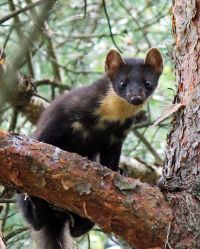
European pine marten
In winter, they grow fur on their paws, similar to that of arctic foxes.
The winter fur begins to grow in August and molts in the spring. Young animals start to grow fur during the first winter.
Read all facts
Toco toucan
The eggs are incubated by both parents and hatch after 17-18 days. Chicks hatch naked and blind.
They do not open their eyes until they are three weeks old. The chicks have special pads on the bott ...
Find out more
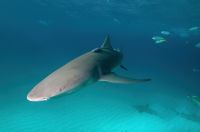
Lemon shark
It was first described by a Cuban zoologist, Felipe Poey, in 1868.
Read all facts
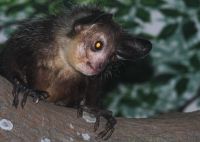
Aye-aye
Their natural predator is a
fossa
, a cat-like mammal endemic to Madagascar.
A fossa is the largest predatory mammal living in Madagascar.
Read all facts
Butterflies
The Hornet moth is a butterfly that confusingly resembles a wasp.
It can also make wasp-like sounds while flying. This species of butterfly is an example of mimicry, a trait that protects insects from predators.
Read all facts
Ocean sunfish
They do not have many enemies.
Those giants are hunted mostly by sea lions, killer whales and sharks. Juveniles may be also hunted by tunafish or common dolphinfish.
Read all facts
Sand lizard
Sand lizard prefers lowland areas such as meadows, gardens and open spaces where it can bask in the sun.
Read all facts
18 facts about True seals
Earless pinnipeds
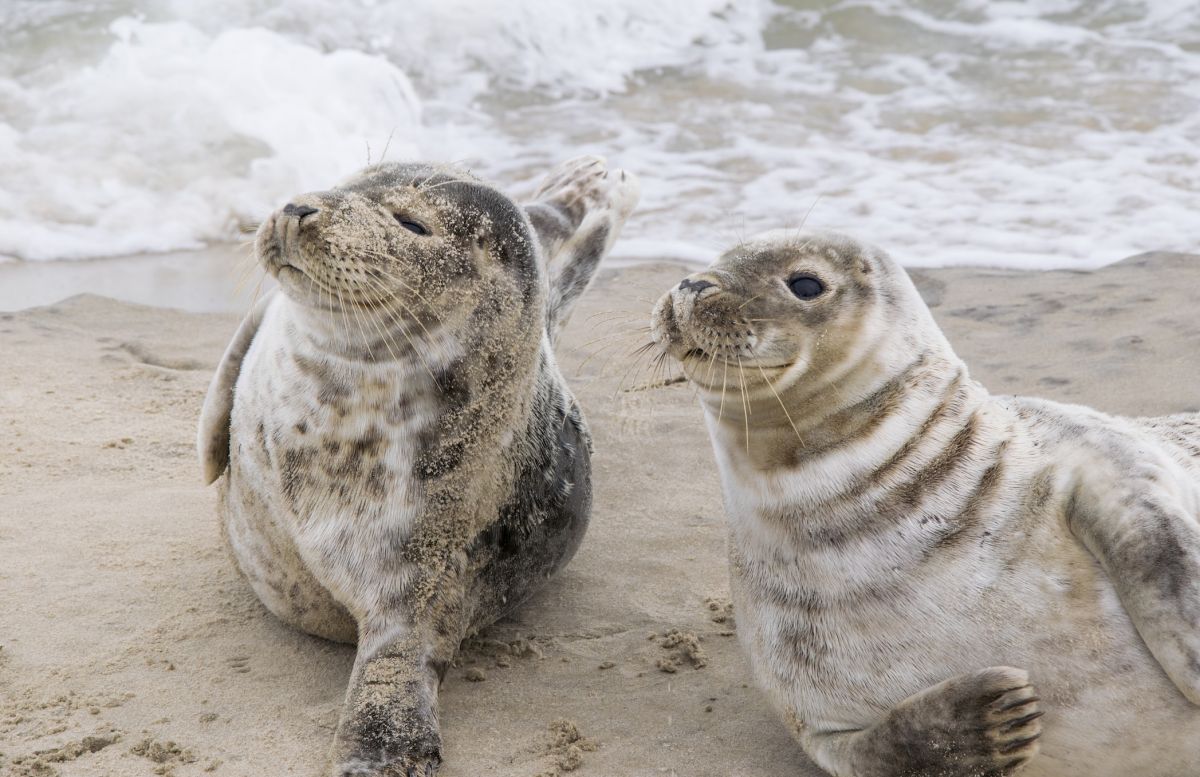
Along with earwigs and walruses, seals are classified as pinnipeds - marine mammals that appeared on Earth about 24 million years ago. They share many ...
14 facts about Wombat
An animal that excretes cubes
The wombat is a herbivorous mammal found naturally in southeastern Australia. It is the only marsupial whose teeth are constantly growing, and its fec ...
17 facts about American flamingo
Phoenicopterus ruber
The American flamingo is the most common of the species. It inhabits mainly Central America, although it can also be found in Africa, Europe, and Asia ...
26 facts about Hippopotamus
One of the most dangerous and aggressive mammals
At first glance, hippos appear to be gentle, slow animals. Aside from elephants, the only ones to surpass them in size, they are Africa's largest anim ...
21 facts about Axolotl
Ambystoma mexicanum
They are very distinctive animals with unusual characteristics. In nature, despite never reaching an adult form, they are capable of reproduction. Rem ...
17 facts about insects
The most numerous group of animals
The variety of insects is enormous. There are those whose sizes are given in micrometers and whose body length is greater than that of dogs or cats. B ...
Salamanders
Very similar but completely different vertebrates
17 facts about Sand lizard
Lacerta agilis
This little reptile lives in lowland areas of Europe and Asia. It plays a valuable role in the ecosystem by hunting caterpillars that parasitize agric ...
16 facts about European wildcat
Felis silvestris
This wild cat is very similar to the European cat, which is the common shorthair cat. It is characterized by a slightly larger mass and size. In the w ...
20 facts about Common cuckoo
Cuculus canorus
They are known for their distinctive mating song, which resounds with the familiar "cuckoo" repeated in two or three syllables. Another interesting fe ...
Llamas
Very similar and therefore often confused
18 facts about Black-headed python
Aspidites melanocephalus
These non-venomous snakes live exclusively in Australia where they inhabit many different ecosystems. They live in burrows, which provide them with bo ...
20 facts about Ocean sunfish
Mola mola
The ocean sunfish is found in all tropical and temperate seas of the world. Its appearance resembles a large head with an attached tail. The body of t ...
13 facts about Zebra mussel
Dreissena polymorpha
This freshwater mussel is an excellent water filter-feeding organism. Originally native to Eurasia, it has been accidentally introduced into European ...
26 facts about Brittle stars
Also known as serpent stars, or ophiuroids
Although ophiuroids resemble starfish, they are quite different from them. First, they move with their flexible arms, whereas starfish use tube feet ...
Previous
Next