Biography

Tuesday, 2 December 2025
32 facts about Peter the Great
The first Emperor of all Russia
Peter the Great is considered one of Russia's greatest rulers. He was a great reformer, strategist, and builder who was the first of the tsars to trav ...

Did you know?

Peter the Great
Many specialists in various fields came to Russia (about 750 people, mostly Dutch).
Among them were military officers, craftsmen, and people of science and art. Their task was to teach Russians and instill Western European progress in the country.
Sting
In the 1980s, Sting also gained recognition for his interest in social issues.
In 1985 he performed at Live Aid, a charity concert for famine relief in Ethiopia. In 1985, 1986, and 1988, he performed at Amnesty International concerts to support human rights.
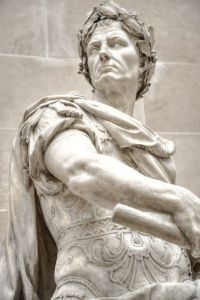
Gaius Julius Caesar
Cleopatra bore Caesar a son - Ptolemy Caesar, commonly known as Caesarion.
He was the last ruler of ancient Egypt and was killed on Octavian Augustus' orders when he invaded E ...
Peter the Great
He built from scratch the new city of St. Petersburg, to which he moved the country's capital.
In 1721, the Senate proclaimed Tsar Peter the Great as Emperor of All-Russia.
Michelangelo
The last Pieta he made for the cathedral in Florence was intended in his last will for his tomb.
Michelangelo loved to create significant, monumental things. He was not satisfied with commissions o ...
Robert Oppenheimer
In Europe he wrote 16 papers on quantum mechanics, and together with Born published a paper on the Born-Oppenheimer approximation. He then decided to return to the United States.
Upon his return to the States, he wanted to work on promoting quantum mechanics in American universi ...
Napoleon Bonaparte
State finances improved rapidly with the reform of tax offices and the introduction of indirect taxes on tobacco, liquor, and salt.
Such measures made it possible, for example, to pay pensions.
Anna Pavlova
In 1911, Pavlova formed her own ballet company.
Her choreographies were shaped by Marius Petipa’s style, but she also choreographed her own pieces. She toured Europe, South America, North America, Asia, Australia, and New Zealand.
Michelangelo
Wanting to learn more about human anatomy, he secretly performed autopsies in the hospital (Santo Spirito Monastery).
As a token of his gratitude, Michelangelo carved a wooden crucifix for the monastery, which is the only polychrome wooden sculpture in the artist's oeuvre.
Napoleon Bonaparte
A major boost to the state budget was France's sale of the Louisiana Territory to the United States in 1803.
The transaction amounted to $15 million. Napoleon realized that it would be difficult to keep such a ...