Biography

Monday, 22 December 2025
21 facts about Ada Lovelace
The first female programmer
Ada Lovelace was a British poet and mathematician who lived in the first half of the 19th century. She was the daughter of one of Britain's greatest d ...

Did you know?

Frederic Chopin
In the autumn of 1810 the Chopin family moved to Warsaw.
They settled in a tenement house on Krakowskie Przedmieście Street, which no longer exists, and soon ...
Sting
Sting began his solo career with the album "The Dream of the Blue Turtles," which proved to be a great success - the singles from it are: "If You Love Somebody Set Them Free" and "Fortress Around Your Heart."
Homer
The Odyssey is the story of the adventures of King Odysseus.
It begins after the end of the Trojan War. The epic describes the fate of Odysseus, King of Ithaca, ...
Ludwig van Beethoven
"Ode to Joy" is a poem by Friedrich Schiller written in November 1785 - the final author's version comes from 1803.
Already in a sketchbook from 1789, Beethoven wrote down a phrase from the first part of the chorus, ...
Kate Middleton
She spent her early childhood abroad.
When she was two years old, her father got a job as an airport manager in Amman. The whole family moved to the Jordanian capital and lived there for the next two years.
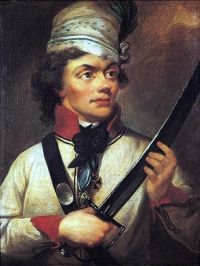
Tadeusz Kosciuszko
He also met with Napoleon, whom he was skeptical about, not trusting him.
He was opposed to the idea of tying the Polish cause to him. Napoleon called Kosciuszko a "hero of the north."
Hypatia
She was the daughter of the mathematician, astronomer and philosopher Theon of Alexandria.
Theon was an active scholar, he is known to have observed the solar eclipse that took place in Alexa ...
Salvador Dali
He was always fascinated by the legendary painter Pablo Picasso.
While in Paris in 1927, he met with Picasso in his atelier, where the painter showed him his works. ...
Peter the Great
The reform also included the central government of the state. A ruling Senate and colleges were created.
He placed subordinates at the head of the new offices, thus perpetuating tsarist absolutism and centralization of power.
Constantine the Great
He reorganized the Roman army.
The new army consisted of mobile units (comitatenses) and garrison troops (limitanei) capable of repelling internal threats and barbarian incursions.