Biography

Monday, 7 September 2026
32 facts about Peter the Great
The first Emperor of all Russia
Peter the Great is considered one of Russia's greatest rulers. He was a great reformer, strategist, and builder who was the first of the tsars to trav ...

Did you know?

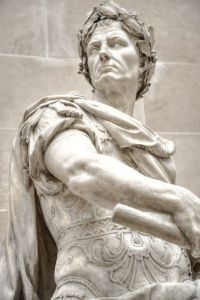
Gaius Julius Caesar
His highest religious dignity, however, was bestowed on him in 63 BC when he was elected Pontifex Maximus.
This was the highest priest in Rome, overseeing all religious life. The office also provided considerable political influence which was most important to Julius Caesar.
Aristotle
Aristotle was the first ancient philosopher who would rely on science and logic.
Other great thinkers of his time, such as Socrates and Plato, discarded Aristotle’s fondness for factual and scientific reasoning in favor of philosophical thought.
Michelangelo
Two funerals of Michelangelo took place in Florence.
The first, on the day after the body was returned, in the Basilica of Santa Croce. The second funera ...
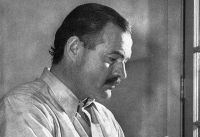
Ernest Hemingway
In Paris, Hemingway met Gertrude Stein, James Joys and Ezra Pound, who helped young artists develop their careers.
Gertrude Stein, one of the most influential authors of modernism, became Hemingway’s mentor. She int ...
Christopher Columbus
As part of his work duties, he began his first oceanic trading voyages to England, Madeira and Guinea.
Soon he married Felipa Perestrello de Moniz, the daughter of the former governor of Porto Santo, an ...
John Sutter
California Goldrush drove him into bankruptcy.
Sutter's land was immediately overrun by immigrants obsessed with the potential fortune they may earn. They stole whatever there was to steal including livestock. Colony fell into ruin around 1850.
Frederic Chopin
In 1818, the first review of Chopin's works was published in print.
Marilyn Monroe
Monroe’s autobiography, “My story,” was written at the peak of her career, but published 10 years after her death.
John Sutter
Although his colony was expanding, Sutter had financial problems.
In August 1848, Sutter's son John Augustus Sutter Jr. came to the colony to help his father get out of financial difficulties.
Peter the Great
Many specialists in various fields came to Russia (about 750 people, mostly Dutch).
Among them were military officers, craftsmen, and people of science and art. Their task was to teach Russians and instill Western European progress in the country.