Countries

Monday, 11 May 2026
30 facts about China
A civilization that has existed continuously for 5000 years
China is the most populous country with the longest-living civilization in the world. It is the home of many inventions and a treasure trove of folk m ...

Did you know?

Faroe Islands
The Faroe Islands have a very rich tradition of folk singing and dancing.
As one of the few places in Europe, the Faroe Islands cultivate the tradition of Faroese chain dance ...
Slovakia
Every year, a marathon street race - the International Peace Marathon - takes place on the streets of Košice (the second largest city in Slovakia).
The first edition took place on October 28, 1924, making it the oldest marathon in Europe. Since 198 ...
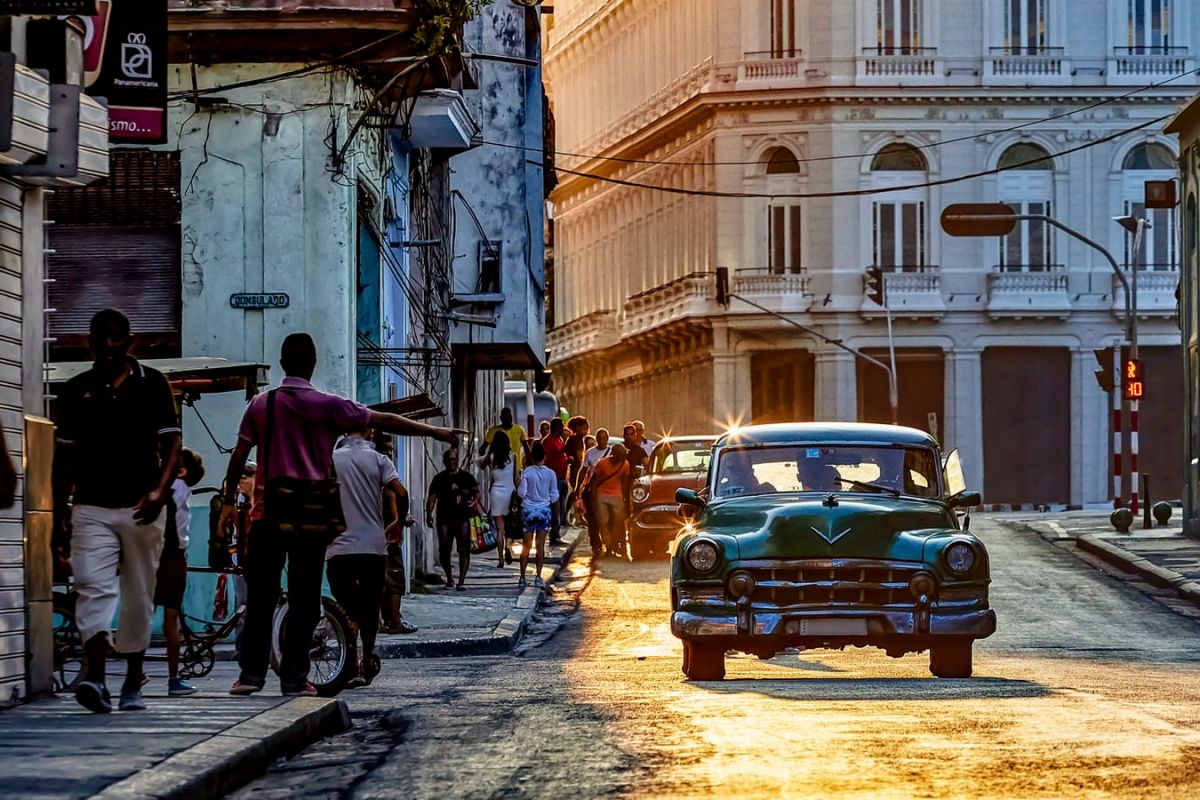
Cuba
The capital of Cuba is Havana.
It is the capital and also the largest city and port of the island and the entire Caribbean. It is s ...
Kazakhstan
Kazakhs only adopted Islam in the 16th century.
For a long time, it competed with Shamanism.
Kazakhstan
Islam is the dominant religion.
Muslims account for more than 70% of the total number of believers, followed by Christians at 26% and Orthodox Christians at 24%.
Croatia
Dubrovnik, which was an independent state at the time, was the first to formally recognize the United States as a nation when it declared its independence.
Peru
In the eastern foothills of the Andes, there are cultivations of the Erythroxylum coca, also known as Coca.
This shrub occurs only in cultivation. Coca leaves contain cocaine in the amount of 0.25-1.3% and ar ...
Croatia
After World War I, Croatia became part of the Kingdom of Serbs, Croats and Slovenes, and in 1929 part of Yugoslavia.
During World War II, the fascist Ustasha faction seized power in the country, declared independence, and established Croatia. Croatia was then allied with Germany.
Russia
Russia is the largest country in the world.
It covers over 17 million square kilometers.
Liechtenstein
German is the official language according to the constitution.
In Liechtenstein, there is the phenomenon of diglossia. In practice, the German language used in everyday communication consists of eleven dialects.