








Llamas

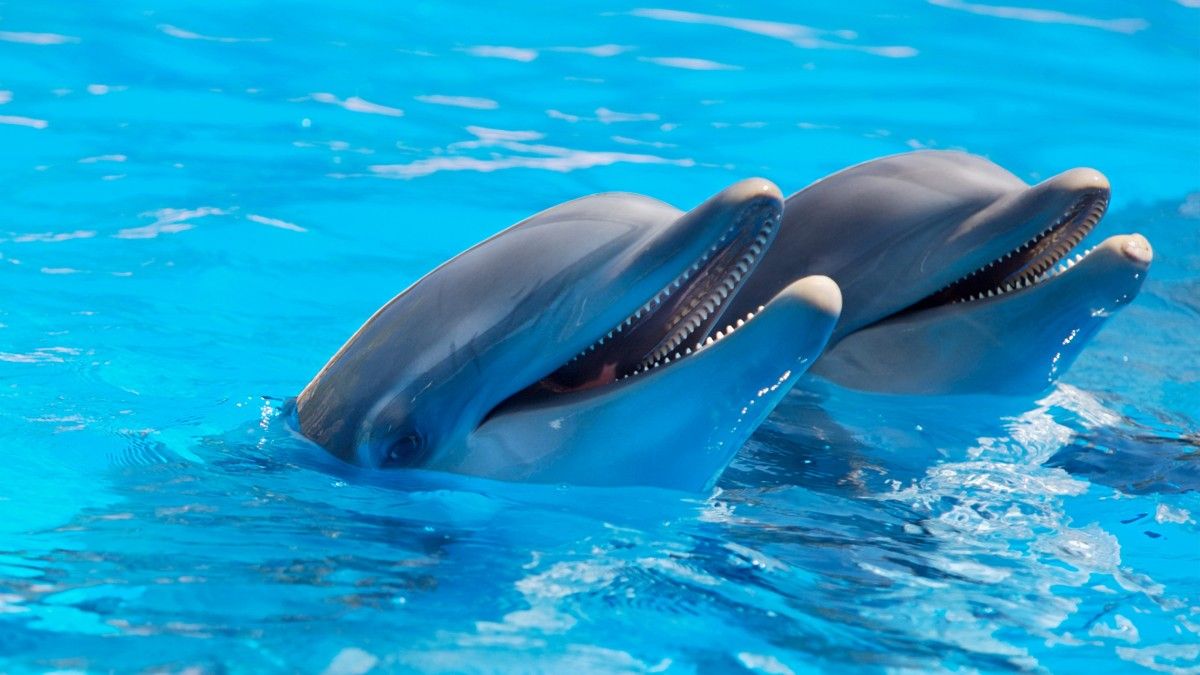
They live in both oceans and rivers. They often travel in large herds, sometimes exceeding 1000 individuals. They have their language, which we have not yet managed to decipher. Dolphins are very curious and sociable, they also enjoy the company of people.
Because dolphins breathe atmospheric air, they cannot afford to sleep underwater for long periods. So they have adapted to aquatic life by taking 15-20 minute naps during which only one hemisphere of the brain sleeps.
During such a nap, the dolphin can swim, breathe normally, and look out for threats.
This is how they find their way in the environment around them. By emitting high-frequency sounds, they listen to the echo returning to them and use it to build a "map" of space. They also use echolocation to find food and hunt.
The diet varies depending on the species and where it occurs. The basis of their menu is fish and squid, which are also a source of water due to the high content in the bodies of these animals. Because dolphins do not drink, all of their water intake comes from food.
Although they belong to the dolphin family, this does not stop them from hunting their smaller cousins.
They can send messages by moving their tail, swimming, or adopting certain poses. In addition, they have a rich language consisting of special clicks and high-frequency whistles. They can use sounds to inform each other about danger, show their emotional state, or call younger, unruly dolphins to order.
Most of them live in shallow ocean waters in the tropical zone.
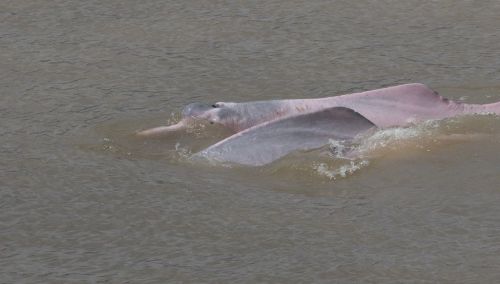
For example, the pink river dolphin is a representative of dolphins living in the waters of the Amazon River and Orinoco River.
Their intellect is equal to that of monkeys and their brain structure is very similar to that of humans.
Bonds in groups are not permanent, dolphins move from one group to another from time to time. In conditions of abundant food, groups of dolphins can periodically join together to form a supergroup, the number of which can exceed a thousand individuals.
Depending on the species, baby dolphins do not leave their mother's company for 3 to 8 years.
Dolphins are known for caring for injured and sick individuals. When necessary, they transport injured colleagues to the surface so they can get some air.
Fights are usually caused by females, for whose company males fight. During confrontations, blows and bites occur. In extreme cases, when the fight is very intense and exhausting, the male who lost the fight may be expelled from the group.
The longest-living specimen in captivity was Nana, living in the Shimoda Aquarium in Japan. This dolphin lived to the ripe old age of 47.
Pesticides, heavy metals, plastics, and other industrial and agricultural pollutants that do not decompose quickly in the natural environment accumulate in dolphins' bodies.
Many dolphins also die when entangled in fishing nets.
They are hunted aggressively and killed with harpoons. Despite the relatively high mercury content in the meat of these mammals, no harmful effects of consuming dolphin meat on human health have been found so far.
They use their tail and the back of their body to swim, which propels the animal. The pectoral fins serve only for steering, while the dorsal fin serves as stabilization.