Countries

Thursday, 4 December 2025
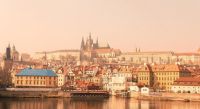
37 facts about Slovakia
A land of castles and palaces
Slovakia is a small landlocked country that was established in its present form after the division of Czechoslovakia in 1993. It is one of the countri ...

Did you know?

Cuba
In 1880, slavery was abolished in Cuba.
When another failed rebellion broke out on the island, the United States went to war with Spain and ...
Cuba
In the first half of the 19th century, Cuba was one of the most developed places in Latin America (countries of the South and Central America where Romance languages are spoken, i.e. Spanish, Portuguese or French).
It was also one of the last Spanish colonies. Cuba became the leading sugar producer in the region. ...
Bangladesh
Among the largest mammals in Bangladesh, Indian elephants are rare, as are gaurs (large, dark oxen, also known as Indian bison).
Among predators, leopard and Bengal tiger are found, but their number is small. There are also macaques and langurs, cobras, pythons and gharials.
Singapore
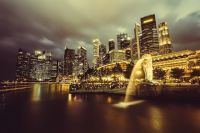
The country does not possess any natural resources, so they bet on economics.
Turkey
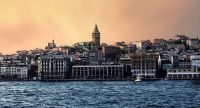
One of the oldest and largest markets in the world is Grand Bazaar, located in Istanbul.
It covers 64 streets and is visited by roughly 40,000 people a day.
Croatia
One of the most characteristic sights of Dalmatia is the tiny church of St. Nicholas, which stands on a hill near Nin.
On a grassy hill, with a single pine tree, stands a tiny pre-Romanesque church from the 11th century ...
New Zealand
New Zealand is a constitutional monarchy.
The head of the country is King Charles III, represented by a governor-general.
Zanzibar
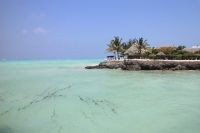
The historical center of the capital is the Stone City - the old part of Zanzibar on the UNESCO World Heritage List.
The city's architecture is a mixture of Arab, Indian, European, and African cultures. Characteristic ...
Vatican City
The Vatican is located on Vatican Hill, near the right bank of the Tiban River.
Vatican Hill is not among the seven hills of Rome (the seven hills on the eastern left side of the T ...
Cuba
In 1959, the revolutionary leader Fidel Castro became prime minister of Cuba.
The government initiated the nationalization of the economy, especially foreign ownership, and land ...